
What Is Overbooking?
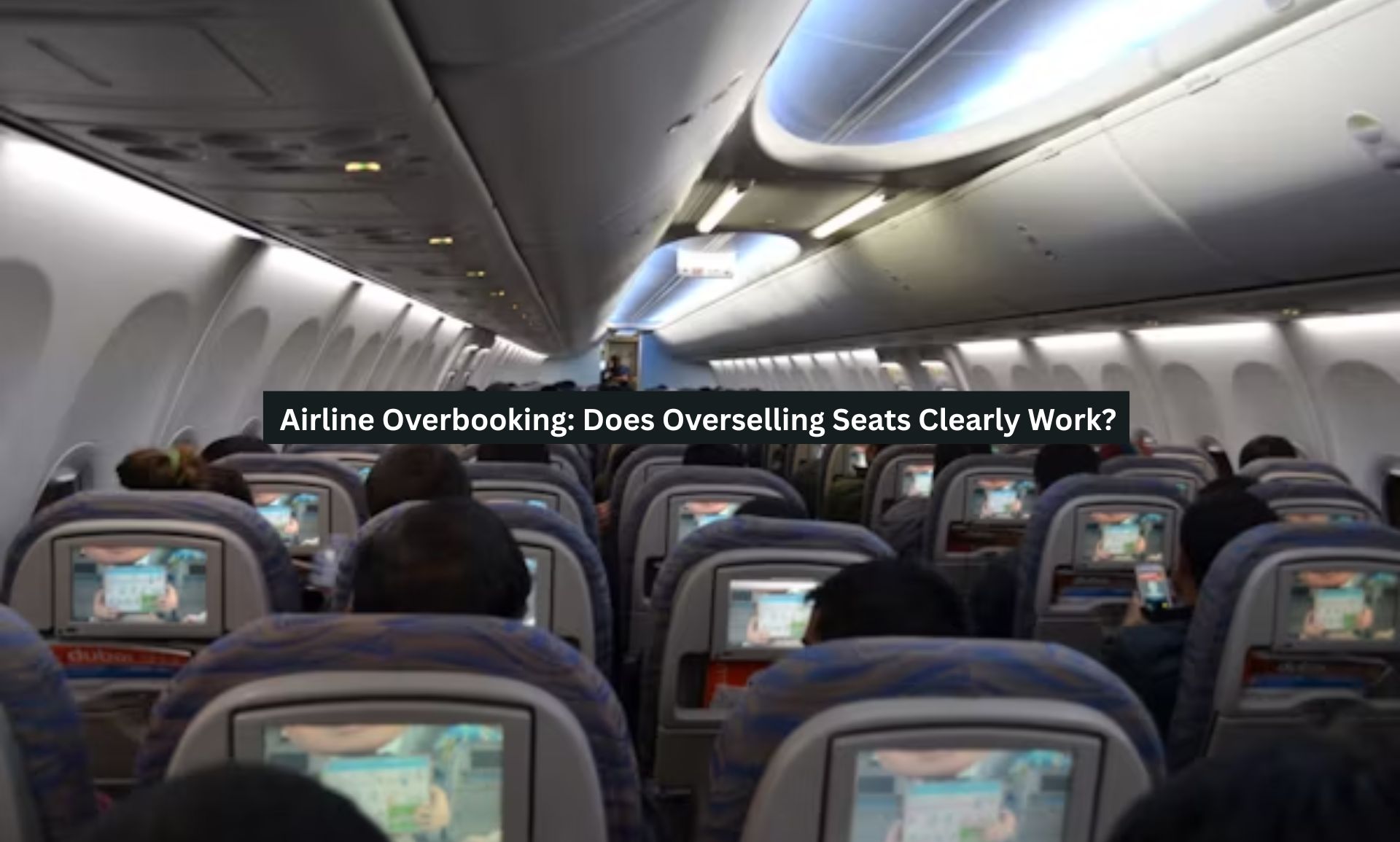
Airline overbooking occurs when an airline sells more tickets for a flight than there are available seats on a plane. This ensures that flights operate at most capacity and minimizes losses from empty seats. Basically, that’s how vendors make amends for inevitable no-shows and last-minute cancellations.
The average no-show rate is claimed to range from 5 to 15 percent, depending on the season (say, before Christmas, people are less likely to miss their flight than on any given Tuesday), route, airline, and so on. The reasons travelers don’t show up vary significantly. The most common ones are
- Changes due to unforeseen circumstances,
- Heavy traffic on the way to the airport,
- Long security procedures at the airport,
- Missed connections, and
Skiplagging (getting off at the transition point of the connecting flight instead of proceeding to the final destination).
If a passenger doesn’t show up for the flight without informing the airline, they typically don’t get their money back, so providers suffer minimal losses in that case. However, if a traveler cancels their booking last minute, the odds of reselling the ticket are miserably low. So the airline risks having that seat empty – and losing money.
To avoid those losses, providers try to forecast how many people don’t make it to the boarding gate and sell some extra tickets to fill the plane. But what if the prediction isn’t accurate enough and everyone shows up? In this case, passengers are being bumped – or denied boarding the plane, frustrating as it may be.
Voluntary Bumping
When more ticket holders show up for the flight than expected, airlines generally first try to find volunteers. The staff asks travelers waiting at the gate to give up their seats in exchange for negotiated compensation for inconvenience. This is called voluntary bumping.
Mainly, the airline might offer the volunteers to sit on a later flight or some other form of alternative travel arrangements. Some other perks that may be included in compensation are
Vouchers for flights or other travel products (meals, transportation, hotel stays, etc.),
Cash refunds,
Future travel upgrades, etc.
Needless to say, voluntary bumping is the preferred solution for airlines as it minimizes passenger dissatisfaction and allows them to avoid bad publicity. Some airlines even offer to add a traveler to the volunteer list during check-in, which then makes things even easier.
However sometimes there is much less congeniality…
Involuntary Denied Boarding (Involuntary Bumping)
If not enough passengers agree to give up their seats, the airline may have to resort to involuntary bumping. This means the gate agents themselves choose who will not be boarding, typically based on criteria like
The fare paid (often, the lowest fare tickets are at greater risk of being bumped),
Check-in time (the latest check-ins are often the first to be denied boarding), or
Frequent flyer status (the highest levels are rarely being bumped).
Of course, airlines try to add a spoonful of sugar to make the medicine go down (i.e., avoid bad publicity) and make up for the inconvenience. It usually involves booking a seat on an alternative flight and offering additional bonuses.
In any case, involuntarily bumped passengers are legally entitled to compensation. Its amount is typically 200 to 400 percent of the ticket price, but it can be different depending on the airline, route, time of delay, and other factors (we’ll discuss the legal requirements further).
After United Airlines infamously and forcibly dragged a passenger off a plane in 2017, many providers have reviewed their policies and raised the compensation to as much as $10,000 per seat.
However despite the seemingly large losses, both financial and reputational, airlines still have overbooking as a common practice. But why?
Why Do Airlines Overbook?
The average net profit margin in commercial aviation is around 2.6 percent as per IATA. Flights are expensive to operate, and each empty seat is a hard hit on the bottom line. To address the risk of operating at less than full capacity and minimize revenue leakage, airlines have several options.
One is raising the ticket price to pass the costs of lost seats to travelers. But since aviation is a crowded industry, charging more for seats isn’t really a viable strategy. Carriers heavily invest in dynamic pricing technology to ensure they offer optimal, competitive fares.
You can also get more in-depth information on the topic from our posts about the dynamic pricing strategy for airlines, AI revenue management in aviation, and flight price predictor development.
Another option is charging penalties for no-shows. Eventually, airlines tried to enforce this practice, but bad publicity and social resistance made most of them abandon it. So nowadays, depending on the airline, a no-show fee may be the full ticket price or a portion of it that’s non-refundable.
Meanwhile, overselling is a calculated risk that aims to fill more seats and generate more revenue – despite occasional compensations. This takes us back to our initial question: Does this approach really work? Let’s get more specific and talk some numbers.
How Effective Is Overbooking?
As an example, let’s take an average one-way US domestic flight. Let’s say airline X flies a Boeing 737-800 carrying 160 passengers, which may generate around $30,000 in ticket revenue (given that the average airfare for a roundtrip in the US in 2024 is around $388).
If 10 percent of those passengers cancel right before takeoff, airline X might lose $3,000 per flight (if travelers apply for a refund). However, by overbooking by 10 percent (or 16 extra tickets), the airline compensates for those potential no-shows and can fill all the seats, recapturing that $3,000.
If $3,000 in saved revenue doesn’t seem very impressive, scale it to the traffic numbers. Ryanair operates up to 3,600 flights per day, Delta flies 4,000, United does an average of 5,000 departures daily, and American Airlines offers 6,700! Over the course of hundreds of thousands of flights per year, airlines can increase revenue by tens of millions of dollars.
As for compensations, with an average IDB rate of 0.3 per 10,000 passengers, the instances of payouts to involuntarily bumped passengers are very rare and may only occur once in about every 200 flights. And the incentives to volunteering travelers are often non-cash, such as vouchers and future upgrades, so they don’t impact revenue that much.
So you can see that although the risk of customer annoyance is high, the financial gains from overbooking outweigh the impact of negative PR. Well, money talks. But when well-managed, with data-driven calculations and proper compensation policies in place, overbooking strikes a balance between profitability and customer satisfaction. So let’s explore the technologies that make all this work.